Aiserveon
Choosing a top AI training server manufacturer in China requires more than comparing processor counts or published prices. Training workloads expose weaknesses quickly: unstable power delivery, restricted airflow, slow memory, and immature firmware can interrupt expensive experiments. A serious supplier should explain its design choices, not simply display impressive benchmark numbers. Look for experience with GPU density, liquid or air cooling, rack integration, and long-duration testing. Ask how each system behaves when eight accelerators run continuously beside storage and networking equipment. The answer should include measurable thermal limits, failure procedures, spare-part availability, and documented support channels. Details matter.
This outline examines how Chinese manufacturers develop, validate, and support servers for large language models, computer vision, and scientific computing. It considers component quality, manufacturing consistency, BIOS and driver compatibility, energy efficiency, and deployment flexibility. Independent certifications and transparent test methods can strengthen confidence, although certification alone cannot prove every operational claim. Real customer references may reveal more than polished case studies, especially regarding delivery accuracy and support response times. A reliable ai training server manufacturer should welcome technical questions and acknowledge where its platform still needs improvement. No vendor is perfect. Some specifications age quickly. That is why buyers should compare current evidence, run acceptance tests, and measure performance in their own environment. The goal is not to name a winner too early. It is to identify a manufacturer capable of consistent results, clear communication, and responsible long-term cooperation.
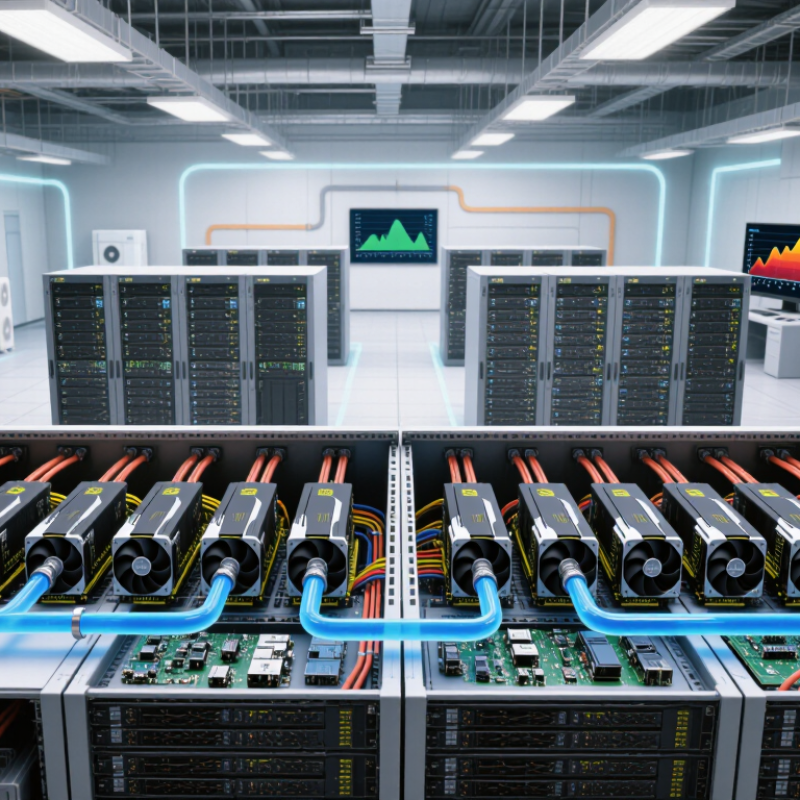
China’s AI training-server landscape is shaped by more than a single leading manufacturer. It includes chassis makers, board integrators, power suppliers, cooling specialists, and data-center operators. TrendForce’s 2024 forecast estimated global AI-server shipments at about 1.67 million units, up 41.5% year on year. This is not a China-only figure, but it reflects rising demand for dense compute systems. Cooling matters.
A typical training rack may combine multiple accelerators, high-speed interconnects, redundant power shelves, and liquid-cooling equipment. Manufacturing quality depends on how reliably these parts work together under sustained workloads. Teams must validate firmware, check thermal performance, and manage component supply. China’s electronics supply base can support fast integration, while access to advanced accelerators and consistent components can limit some configurations. Not evenly, though.
The International Energy Agency’s Energy and AI report estimates that data centers used about 415 terawatt-hours globally in 2024, or roughly 1.5% of electricity demand. Efficiency is therefore a design concern, not just an operating expense. Buyers can compare tested performance per watt, rack cooling capacity, repair times, and software compatibility. Peak specifications alone tell little. I would also treat vendor claims cautiously: independent workload testing remains uneven, and public specifications rarely show long-term failure rates.
China’s AI server market revenue grew from an estimated US$4.1 billion in 2022 to US$7.46 billion in 2023. The 2027 figure is a forecast, not a reported result. The 2022 estimate is calculated from IDC’s reported 82.5% year-over-year growth in 2023. Source: IDC.
Top AI Training Server Manufacturer in China?
Key Technologies Used in AI Training Servers
AI training servers combine accelerators, high-speed memory, and fast interconnects to move large workloads efficiently. GPU or other AI accelerator cards perform parallel calculations, while high-bandwidth memory keeps model data close to compute units. In real deployments, performance depends on the full system, not one impressive component. A server with powerful cards can still wait on storage or network traffic.
Thermal design is equally important. Dense accelerator trays produce concentrated heat, so airflow paths, fan control, and sometimes liquid cooling must match the rack’s power profile. High-speed networking lets multiple servers share training tasks with less communication delay. NVMe storage also helps feed datasets and checkpoints, though poor data preparation can erase much of its benefit. Heat is unforgiving. One detail is often underestimated: cable layout can obstruct service access and airflow.
Tips: Check accelerator memory, power draw, cooling capacity, and network bandwidth together before choosing a configuration. Ask for workload-based test results, not only peak specifications. Measure before scaling. When comparing manufacturers in China, review engineering documentation, component traceability, burn-in procedures, and support options. These checks help, but testing with your own model and dataset is still essential.
Choosing a Chinese AI training server manufacturer requires more than comparing accelerator counts. A credible evaluation starts with workload fit: model size, precision, interconnect needs, and expected utilization. Request a bill of materials listing accelerator type, memory capacity, network adapters, power supplies, and cooling assumptions. Details matter. A dense rack may exceed a data center’s power or cooling limits, even when its benchmark looks impressive.
Ask for test evidence from configurations close to your own, not just a headline score. Useful records include sustained throughput, node-to-node communication results, thermal behavior, and performance during long runs. Check whether test conditions, software versions, and measurement methods are documented. Missing data warrants follow-up, but it does not automatically prove poor quality. Factory audits, component traceability, burn-in procedures, and quality-control records can help verify production claims.
Support matters in daily operations. Confirm spare-part availability, response hours, firmware update practices, and regional hardware diagnostics. Ask how a failed accelerator is isolated and replaced. Customer references can help, though their workloads may differ from yours. No checklist is perfect; a pilot can expose integration issues that specifications miss. That’s worth testing.
Use these criteria to compare manufacturers and verify claims with product documentation, test results, and factory records. Requirements vary by workload and deployment; the guidance below is not a ranking of specific manufacturers.
| Evaluation Dimension | What to Evaluate | Evidence to Request | Why It Matters |
|---|---|---|---|
| Accelerator configuration | Supported accelerator count, memory capacity, power limits, and upgrade options per server. | Configuration sheet, validated bill of materials, and supported-system list. | The server must fit the model size, precision format, and workload without exceeding platform limits. |
| Scale-up interconnect | Accelerator-to-accelerator bandwidth, topology, and communication path within a node. | System topology diagram and measured communication or collective-operation results. | Fast, well-balanced communication helps keep accelerators busy during distributed training. |
| Scale-out networking | Supported network adapters, link speeds, port counts, and congestion-control features. 200 Gb/s and 400 Gb/s links are available in current data-center networking environments. | Adapter specifications, fabric design, and multi-node communication test results. | Training across multiple servers depends on efficient data exchange and a properly designed fabric. |
| Storage and data path | Drive types and capacity, local storage bandwidth, boot options, and compatibility with shared storage. | Drive-bay layout, supported-drive list, and workload-relevant read/write benchmarks. | A slow or undersized data path can leave compute resources waiting for training data. |
| Power and rack planning | Maximum and typical system power, power-supply redundancy, connector requirements, and rack-level power needs. | Power budget, power-supply specifications, and tested consumption under representative workloads. | Actual load and redundancy requirements affect facility capacity, operating cost, and deployment feasibility. |
| Thermal management | Air- or liquid-cooling design, supported operating conditions, component temperatures, and service procedures. | Thermal test reports, cooling diagrams, and documented maintenance requirements. | Cooling capability affects sustained performance and must match the data center’s infrastructure. |
| Software compatibility | Operating-system support, accelerator drivers, firmware, container tools, and compatibility with the customer’s training framework. | Compatibility matrix, tested software versions, and reproducible setup instructions. | Compatibility reduces integration work and helps ensure the hardware can run the intended software stack. |
| Performance validation | Measured results for the target model, precision, batch size, and number of nodes; distinguish published benchmark results from customer-specific tests. | Dated test reports with hardware, software, configuration, and measurement methodology. MLPerf results can provide a standardized reference where applicable. | Comparable, reproducible testing is more useful than peak theoretical throughput alone. |
| Reliability and serviceability | Component redundancy, error monitoring, replaceable parts, diagnostic tools, and repair procedures. | Failure and repair records where available, service manuals, spare-parts policy, and warranty terms. | Clear fault isolation and parts access can reduce downtime in long-running training jobs. |
| Manufacturing quality | Documented production controls, component traceability, inspection procedures, and change management. | Quality-process documentation, sample inspection records, and applicable, valid certification records such as ISO 9001. | Consistent processes help control configuration variation and support repeatable deliveries. |
| Security and compliance | Secure boot options, firmware update controls, vulnerability response, and certifications required for the destination market. | Security documentation, update policy, vulnerability-disclosure process, and relevant compliance test reports. | Requirements vary by organization and jurisdiction, so validate the exact deployed configuration and market. |
| Delivery and lifecycle support | Quoted lead time, production capacity, spare-parts availability, support hours, and the expected product-support period. | Written delivery schedule, service-level terms, escalation path, and end-of-life notification policy. | Support and supply continuity matter for scaling deployments and maintaining systems over time. |
AI training server systems power the model-building work behind language tools, image recognition, speech systems, and forecasting. In factories, they can learn from thousands of inspection images to flag surface cracks or misaligned parts. In medical research, they help train models to sort scans for further review, not replace clinical judgment. McKinsey’s 2024 Global Survey on AI found that 65% of respondents said their organizations regularly used generative AI in at least one business function, nearly twice the share reported a year earlier. Adoption is broadening, but it does not mean every organization needs a large training cluster.
The workload determines the server design. Training large models benefits from multiple accelerators, fast links between them, and storage that can feed data without long pauses. Smaller teams may need only a few servers for fine-tuning or testing. Not every workload fits. A common planning mistake is buying for peak ambition instead of measured demand; idle accelerators still consume power and require cooling.
Power and cooling deserve early attention. The International Energy Agency’s Electricity 2024 report estimated data centres used about 460 terawatt-hours of electricity in 2022, and projected global use could exceed 1,000 terawatt-hours by 2026 in its high-growth case. That figure covers data centres overall, not AI alone. For buyers, workload tests, heat measurements, and realistic utilization estimates provide a better basis for sizing than headline performance claims.
How to Select a Reliable AI Training Server Manufacturer
Selecting a reliable AI training server manufacturer starts with evidence, not a glossy GPU count. Stanford HAI’s 2024 AI Index reports that training compute for notable AI models has doubled about every five months. That pace makes upgrade paths essential. Ask for documented GPU, memory, networking, and storage configurations, plus test results using workloads similar to yours. Request thermal and power data under sustained load, not only short benchmark runs. Small details matter. Check component availability, firmware support periods, spare-part lead times, and who handles diagnostics when a node fails. For a Chinese manufacturer, clarify remote-support hours and service arrangements before placing an order.
Power efficiency deserves close scrutiny. The International Energy Agency’s Electricity 2024 report estimated that data centres used about 460 TWh in 2022, with demand potentially exceeding 1,000 TWh by 2026. Compare performance per watt at your actual model precision and utilization; peak figures alone can mislead. Ask for rack-level power and cooling requirements, factory acceptance tests, and burn-in records. Then verify. Request references from deployments with comparable model sizes and inspect sample test logs. A vendor-run demo may not reproduce your workload. No checklist removes every risk. A pilot is still worthwhile; specifications can disappoint in the server room.
The work may include chassis, board integration, power systems, cooling, and data-center coordination. Reliability depends on how these parts perform together under sustained workloads.
They train models for language, image recognition, speech, and forecasting. A factory might use inspection images to flag cracks or misaligned parts.
No. Smaller teams may need only a few servers for fine-tuning or testing. Not every workload fits. Measure demand before buying for ambitious future plans.
Request documented accelerator, memory, networking, and storage configurations. Ask for results from workloads similar to yours, including sustained thermal and power tests.
Very important. Compare performance per watt at your actual workload and utilization. Check rack-level power needs, cooling capacity, and heat measurements.
Ask about component availability, firmware support, spare-part lead times, and repair processes. Review burn-in records and sample test logs. Then verify.
No. Short benchmarks may not reflect long training runs or your software setup. I may be too cautious, but vendor demonstrations can hide practical issues.
Yes. Test a small system with your own workload before committing to a larger purchase. A pilot helps. Specifications can disappoint in the server room.
China’s AI training server manufacturing landscape is advancing through improvements in computing density, system integration, and large-scale production. These systems combine powerful processors and accelerators with high-speed memory, interconnects, storage, and thermal management to support demanding model training workloads. When evaluating manufacturers, buyers can consider engineering capability, product reliability, customization options, manufacturing quality, and the availability of technical support.
AI training servers are used in research, cloud computing, enterprise data centers, and other applications that require substantial computing capacity. Selecting a reliable ai training server manufacturer involves matching system specifications to workload requirements, checking performance and energy-efficiency expectations, and assessing delivery, maintenance, and long-term service capabilities. Careful comparison helps organizations choose infrastructure that can scale with their needs while remaining dependable and practical to operate.
