Aiserveon Aiserveon

Why Choose a Reliable Machine Learning Server Manufacturer?

Time:2026-10-12 Author:Oliver
0%

Choosing a reliable machine learning server manufacturer is not merely a purchasing decision. It shapes model-training speed, data security, maintenance costs, and future expansion. A server may look powerful on paper, yet perform poorly under sustained workloads. Specifications matter, but real deployment conditions matter more.

Jensen Huang, founder and CEO of NVIDIA, has described artificial intelligence as “the most powerful technology force of our time.” His statement highlights why infrastructure deserves careful evaluation. A dependable machine learning server manufacturer should provide tested GPU compatibility, balanced CPU and memory configurations, efficient cooling, and transparent warranty terms. It should also understand demanding environments, from research laboratories to production-scale inference systems. Small details matter. Fan noise matters. Rack depth matters. So does recovery time after a component failure.

Experience reveals weaknesses that product brochures often hide. Ask whether the manufacturer offers burn-in testing, firmware updates, remote monitoring, and responsive technical support. Examine independent performance data, not only promotional benchmarks. A reliable supplier should explain limitations clearly, including power consumption and thermal constraints. That honesty builds trust.

No manufacturer is perfect. Even strong systems can experience shipping delays, software conflicts, or unexpected workload bottlenecks. This is where careful planning helps. Buyers should request reference configurations, service-level commitments, and realistic deployment guidance. The best machine learning server manufacturer is not always the cheapest or most famous. It is the partner that delivers stable performance, accountable support, and practical answers when conditions become difficult.
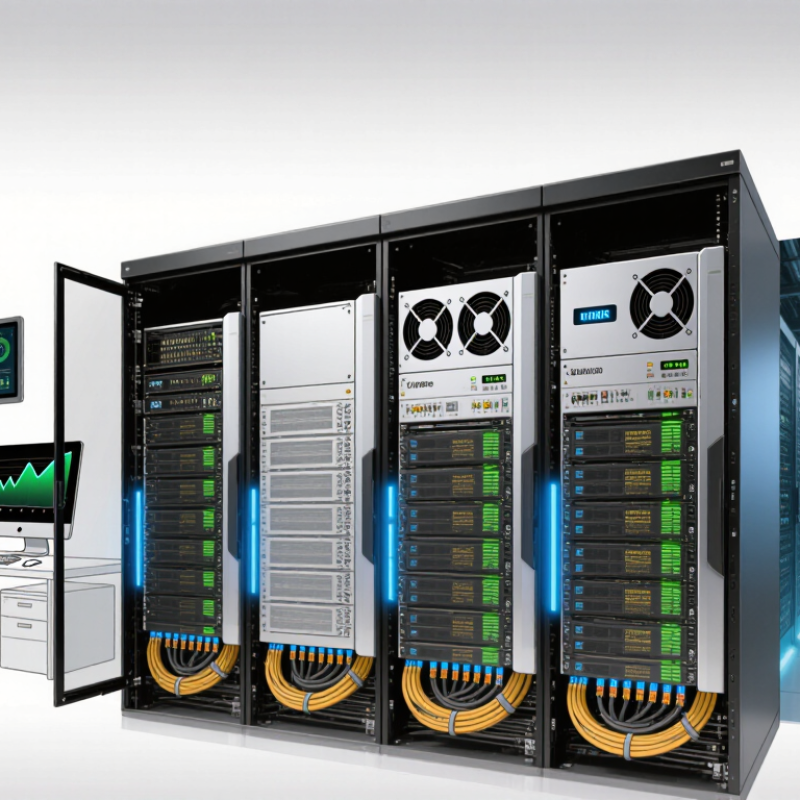
Why Choose a Reliable Machine Learning Server Manufacturer?

Defining a Reliable Machine Learning Server Manufacturer

Defining a reliable machine learning server manufacturer starts with evidence, not impressive specifications. The manufacturer should provide reproducible benchmark results, thermal data, power measurements, and failure-rate records. Independent tests, such as MLPerf Training results, help buyers compare performance under controlled workloads. However, benchmark speed alone proves little.

A server that overheats during a twelve-hour training run is not reliable.

Operational experience matters. Ask whether the manufacturer validates GPU communication, memory stability, storage endurance, and firmware compatibility before shipment. Clear documentation is essential. So is responsive technical support when a cluster fails at 2 a.m. Uptime Institute’s Annual Outage Analysis reported that 60% of serious outages cost more than $100,000. Preventive testing can therefore protect more than computing time.

Energy efficiency deserves equal attention. The International Energy Agency reported that data centers consumed about 460 TWh of electricity in 2022 and could exceed 1,000 TWh by 2026. A dependable manufacturer should offer airflow guidance, power-budget tools, and realistic performance-per-watt measurements. Small details matter.

There is no perfect checklist. Some published results may reflect ideal laboratory conditions. Buyers should request customer references, service-level terms, spare-parts policies, and long-term firmware support. A reliable manufacturer also explains limitations instead of promising constant peak performance. That honesty is useful.

Evaluating Server Performance, Scalability, and Hardware Quality

Choosing a reliable machine learning server manufacturer requires more than reading peak benchmark scores. A practical evaluation should measure sustained training speed, GPU utilization, memory bandwidth, and network latency. Run a workload that resembles your own data, not a polished demonstration. A server may process one batch quickly, then slow under heat. That difference matters.

Hardware quality appears in small details. Error-correcting memory protects long training jobs from silent data corruption. Strong cooling keeps processors stable during overnight workloads. NVMe storage should deliver consistent read speeds when several datasets load simultaneously. Check the power supply design, PCIe expansion options, and cable layout before purchase. Poor airflow can turn a powerful system into a noisy room heater.

Scalability needs equal attention. Can the platform accept more GPUs without replacing its main architecture? Does it support faster networking for distributed training? Clear documentation, firmware updates, diagnostic tools, and responsive technical support also reveal a manufacturer’s professionalism. Request test reports and warranty terms in writing. Vague promises are not enough.

I once trusted a short benchmark and underestimated thermal throttling. That was a costly lesson. Real performance depends on workload duration, ambient temperature, software compatibility, and maintenance. A dependable manufacturer should discuss these limits openly, even when the answers are inconvenient. Reliability is often proven during ordinary service calls, not impressive launch presentations.

Assessing Technical Support, Warranty Coverage, and Service Reliability

Why Choose a Reliable Machine Learning Server Manufacturer?

A machine learning server is only useful when support remains available after installation. In my experience, technical support quality often matters more than impressive hardware specifications. Ask whether engineers provide direct troubleshooting or send generic instructions. Clear escalation paths can reduce hours of lost computing time.

Service reliability should be measured before a purchase. Check response targets for urgent failures, remote diagnostic procedures, and spare-part availability. A dependable service team should explain how it handles failed power supplies, overheating, storage errors, and firmware conflicts. Request documented service-level commitments. Verbal promises are difficult to verify later.

Warranty coverage also deserves careful attention. Review the coverage period, on-site terms, replacement process, and exclusions for intensive workloads. Some warranties cover parts but exclude labor, shipping, or accidental damage. That detail can change the real operating cost. Ask how warranty claims affect research schedules. Fast replacement matters when a training run has already consumed several days.

No manufacturer handles every incident perfectly. Support documentation may be incomplete, and response times can vary during peak periods. I would test the support channel with technical questions before signing a contract. A short delay then may reveal a serious weakness later. Reliability is not a slogan. It appears in communication records, repair procedures, and consistent follow-through.

Why Choose a Reliable Machine Learning Server Manufacturer? - Assessing Technical Support, Warranty Coverage, and Service Reliability

Assessment Dimension Reliable-Service Benchmark Why It Matters for Machine Learning Servers Evidence to Request Evaluation Weight
Technical Support Availability Support coverage that matches the operating schedule, including written escalation procedures for critical incidents. Training jobs and inference services may run continuously, so unresolved hardware faults can interrupt experiments or production workloads. Support hours, escalation matrix, service-level agreement, and coverage by region or time zone. 15%
Initial Response Time Critical incidents should have a contractually defined response target, commonly measured in hours rather than business days. A fast first response helps identify whether the issue involves GPUs, storage, networking, drivers, cooling, or power delivery. Severity definitions, response-time commitments, ticket records, and escalation contacts. 10%
Remote Diagnostics Authorized technicians can review logs, sensor data, firmware versions, and hardware-health information through a secure process. Remote diagnosis can reduce unnecessary component replacement and shorten the time required to restore a compute node. Diagnostic workflow, data-privacy controls, access permissions, and sample troubleshooting reports. 10%
Warranty Duration and Scope The warranty clearly identifies coverage periods, included components, labor coverage, exclusions, and the process for hardware replacement. Machine learning servers contain high-value accelerators, memory, storage, power supplies, and cooling components with different failure implications. Written warranty terms, component-level coverage, labor policy, and return-shipping responsibilities. 15%
Advance Replacement and RMA Process The supplier provides a documented return-material-authorization process and, where available, advance replacement for confirmed critical failures. Replacing a failed node or component quickly is often more practical than waiting for a full repair cycle. RMA flowchart, approval requirements, shipping method, replacement timeline, and defective-part handling policy. 10%
Spare-Parts Availability Critical replacement parts remain available for the stated support period, with a defined process for discontinued components. Specialized accelerators, high-capacity memory, power modules, and cooling assemblies may not be interchangeable. Parts-retention policy, local inventory information, end-of-life notification process, and compatibility list. 10%
Firmware and Driver Support The manufacturer provides validated firmware, BIOS, management-controller updates, and compatibility guidance for supported operating environments. Incorrect firmware or driver combinations can cause instability, reduced accelerator performance, or failed system updates. Compatibility matrix, release notes, rollback instructions, update schedule, and security-update policy. 10%
On-Site Service Capability Qualified field service is available in the deployment region, with clearly defined dispatch conditions and service hours. Large multi-node systems may require physical inspection, cable replacement, component installation, or rack-level troubleshooting. Field-service coverage map, technician qualifications, dispatch targets, and parts-carrying procedures. 8%
System Validation and Burn-In Testing Each configured system is tested for memory, storage, networking, accelerator detection, thermal behavior, and power stability before shipment. Pre-delivery testing helps detect early hardware faults before the server enters a production training cluster. Factory test report, hardware inventory, thermal test results, stress-test method, and acceptance criteria. 7%
Documentation and Knowledge Base Installation, maintenance, troubleshooting, cabling, monitoring, and recovery instructions are current and accessible. Clear documentation enables internal engineers to resolve routine issues without waiting for a support ticket. Technical manuals, configuration guides, searchable knowledge base, revision dates, and administrator training materials. 5%
Service History and Reliability Metrics The supplier can provide measurable service indicators such as incident response performance, repair-cycle time, repeat-failure rate, and customer references. Historical performance is more useful than general claims when estimating operational risk and total cost of ownership. Anonymized service reports, uptime methodology, reference contacts, warranty-claim statistics, and corrective-action records. 10%
Total Evaluation Weight 100%
Recommended scoring method: Rate each dimension from 1 to 5 based on documented evidence, multiply the score by the evaluation weight, and compare suppliers using the same criteria.

Comparing Security, Energy Efficiency, and Total Ownership Costs

A reliable machine learning server manufacturer should be judged beyond processor speed. Security begins with hardware-rooted trust, secure boot, encrypted storage, and signed firmware updates. NIST’s Cybersecurity Framework 2.0 emphasizes governance, protection, detection, and recovery across the technology lifecycle. In practice, I would also check patch response times and spare-part availability. Those details are easy to overlook.

Energy efficiency changes the ownership equation. The International Energy Agency reported that data centers consumed about 240–340 TWh of electricity in 2022, with demand potentially reaching 620–1,050 TWh by 2026. Efficient power supplies, better cooling design, and workload-aware accelerators can reduce operating costs. Uptime Institute’s 2024 Global Data Center Survey reported an average annualized PUE of 1.56. A small efficiency gain matters when servers run continuously, although laboratory figures may not match a crowded production room.

Total ownership cost includes electricity, cooling, maintenance, downtime, software support, and technician hours. A 2024 global data breach study placed the average breach cost at approximately $4.88 million, showing why weak security can overwhelm a cheaper purchase price. I would request three-year energy estimates, warranty terms, firmware policies, and realistic performance tests. Vendor projections can be optimistic. That is where careful review matters.

Making an Informed Choice for Long-Term Machine Learning Growth

Long-term machine learning growth depends on more than processing speed. A reliable server manufacturer supports stable performance as models, datasets, and workloads become larger. In practice, teams need hardware that runs continuously in a controlled data center environment. Reliable cooling, efficient power delivery, and accessible components can prevent costly interruptions. That detail matters.

When evaluating a manufacturer, ask how its systems are tested before delivery. Does the company publish thermal results, compatibility details, and maintenance procedures? Experienced technical teams should explain memory limits, accelerator support, storage options, and upgrade paths clearly. Strong documentation also helps internal engineers solve problems without waiting for outside assistance. Clear warranty terms and responsive service reduce uncertainty during expansion. Independent certifications and verified customer experiences provide useful evidence, although no test can predict every operating condition.

Future workloads may require larger models, faster data movement, or different accelerator configurations. Choosing flexible hardware can protect an investment for several years. A dependable supplier should discuss these changes honestly, including limitations and possible replacement costs. No deployment is perfect. I have seen teams focus heavily on benchmark scores, then struggle with noise, heat, or difficult repairs. That mistake is easy to repeat when purchasing decisions happen under deadline pressure. A thoughtful manufacturer helps customers compare real operating conditions, not just impressive specifications, while leaving room for careful review when the original plan proves incomplete.

Why Choose a Reliable Machine Learning Server Manufacturer?

Making an informed long-term investment in machine learning infrastructure starts with understanding availability. The chart shows the maximum annual downtime associated with common service-availability levels.

Higher availability significantly reduces disruption to model training, inference, and data-processing workflows. Reliable server design, quality components, effective thermal management, and responsive support can help organizations protect long-term machine learning growth.

FAQS

What evidence shows that a machine learning server manufacturer is reliable?

Look for reproducible benchmark results, thermal measurements, power data, and failure-rate records. Independent testing helps comparison. Do not trust specifications alone. A server may perform well briefly, then overheat during a twelve-hour training run.

Why are thermal and power measurements important?

Heat can reduce performance and shorten component life. Request airflow guidance and realistic power budgets. Check performance per watt under sustained workloads. Small temperature changes matter. Laboratory figures may not reflect a crowded server room.

What should be tested before a server is shipped?

The manufacturer should validate GPU communication, memory stability, storage endurance, and firmware compatibility. Ask for testing procedures and results. A failed compatibility check can interrupt a long training project. I would still verify these claims independently.

How can buyers evaluate technical support?

Ask whether engineers provide direct troubleshooting or generic instructions. Check urgent response targets and escalation paths. Test the support channel before signing a contract. A slow reply today may reveal a larger weakness later.

What service details should be confirmed before purchase?

Request documented service-level commitments. Confirm remote diagnostics, spare-part availability, and repair procedures. Ask how the team handles failed power supplies, overheating, storage errors, and firmware conflicts. Verbal promises are difficult to verify.

What should a warranty cover?

Review the coverage period, on-site service, replacement process, and exclusions. Some warranties exclude labor, shipping, or accidental damage. Those details change the real operating cost. Fast replacement matters after several days of training.

How can organizations judge long-term service reliability?

Request customer references, service records, spare-parts policies, and firmware support periods. Ask how warranty claims affect research schedules. Consistent follow-through matters more than polished sales language. No manufacturer handles every incident perfectly.

Is there a perfect checklist for choosing a manufacturer?

No checklist is perfect. Compare performance, cooling, energy use, support, warranty terms, and limitations. Ask manufacturers to explain weak points clearly. That honesty can be more useful than constant peak-performance promises.

Conclusion

Choosing a reliable machine learning server manufacturer is essential for organizations that depend on fast, stable, and scalable computing. A trustworthy manufacturer should provide servers with powerful processors, sufficient memory, high-performance accelerators, efficient cooling, and durable components capable of handling demanding workloads. It is also important to evaluate whether the systems can expand as data volumes, model complexity, and business requirements increase.

Beyond hardware, buyers should assess technical support, warranty coverage, maintenance response times, and overall service reliability. Security features, energy efficiency, upgrade flexibility, and total ownership costs also play a major role in determining long-term value. The lowest initial price may not represent the best investment if a system consumes excessive energy or requires frequent repairs. By comparing performance, quality, support, protection, and lifecycle expenses, organizations can select a machine learning server manufacturer that supports dependable operations and sustainable growth. A well-informed decision helps reduce risks, improve productivity, and create a strong foundation for future machine learning development.

Oliver

Oliver

Oliver is a seasoned marketing professional with a wealth of expertise in driving brand awareness and engagement. With a deep understanding of our company's product offerings, he consistently delivers high-quality content that enriches our professional blog. His insights not only shed light on......